A client forwards a Reddit thread you never saw, already surfacing in Google and AI answers, and asks why it's missing from your Reddit social listening report. A social media listening routine keeps that email from landing. Give each client one goal and one query....
Redesign For multi-location brands
all your locations, one content flow
For multi-brand companies
content collaboration at scale
For agencies
impress your clients and take on more
“The team loved it from the start. Planable helps us overview the entire marketing efforts.“
Google and AI search engines love companies with strong omni-channel visibility, and Semrush’s tool suite seems to make that possible. If you use Semrush for AI, organic, and paid search strategies, it probably makes sense to upgrade to its Social Media Toolkit too.
I tested Semrush’s social media platform. It gets the job done, but I feel like its features are slightly underwhelming compared to other Semrush products: its analytics only cover a select few networks, and the platform lacks inbox management and content approval features, for example.
I worked in social media and SEO for years and learned that a proper omni-channel presence requires treating social media as more of an independent strategy. Social media is where your audience gets the chance to engage with you directly, so treating socials as more of a tack-on to other channels can limit your overall strategy’s effectiveness.
That means specialized social media management tools are ideal, and this list covers the best ones I ever tested and actually worked with.
What are the best Semrush alternatives for social scheduling at a glance?
The tools in this post are full social media management solutions: they handle content scheduling, analytics, inbox management, and more. Still, I purposefully selected platforms that do a specific job particularly well.
For example, Planable is ideal for agencies that need client approvals across multiple brands, while Agorapulse has top-notch inbox management tools. The table below covers what each tested tool I found best at and for whom.
Tool
Best for
Pricing model
Profiles on the entry plan
Free trial
Starting price
Planable
Social media management and content creation workflows
Per workspace
4 pages per workspace on Basic
50 posts, no time limit
$39 per workspace per month, billed monthly
Agorapulse
Teams that prioritize inbox management and moderation
Per user
10 profiles on Standard
30 days
$79 per user per month, billed annually
Hootsuite
Enterprise listening and trend forecasting
Per user
10 accounts on Standard
14 days
$99 per user per month, billed annually
Sprout Social
Brand reputation management and customer care
Per seat
5 profiles on Essentials
30 days
$79 per seat per month, billed annually
SocialPilot
White-label reports on a budget
Flat per plan, with account and user caps
7 accounts, 1 user on Essentials
14 days
$25 per month, billed annually
Buffer
Small teams that want a free plan
Per channel
3 channels on Free
14 days on paid plans, plus a free plan
Free, then $5 per channel per month, billed annually
1. Planable
Best for
Social media management and content creation workflows
Pricing model
Per workspace
Profiles on the entry plan
4 pages per workspace on Basic
Free trial
50 posts, no time limit
Starting price
$39 per workspace per month, billed monthly
2. Agorapulse
Best for
Teams that prioritize inbox management and moderation
Pricing model
Per user
Profiles on the entry plan
10 profiles on Standard
Free trial
30 days
Starting price
$79 per user per month, billed annually
3. Hootsuite
Best for
Enterprise listening and trend forecasting
Pricing model
Per user
Profiles on the entry plan
10 accounts on Standard
Free trial
14 days
Starting price
$99 per user per month, billed annually
4. Sprout Social
Best for
Brand reputation management and customer care
Pricing model
Per seat
Profiles on the entry plan
5 profiles on Essentials
Free trial
30 days
Starting price
$79 per seat per month, billed annually
5. SocialPilot
Best for
White-label reports on a budget
Pricing model
Flat per plan, with account and user caps
Profiles on the entry plan
7 accounts, 1 user on Essentials
Free trial
14 days
Starting price
$25 per month, billed annually
6. Buffer
Best for
Small teams that want a free plan
Pricing model
Per channel
Profiles on the entry plan
3 channels on Free
Free trial
14 days on paid plans, plus a free plan
Starting price
Free, then $5 per channel per month, billed annually
Also, carefully check each platform’s pricing model. Per-user pricing offers good value for solo users or small businesses, but costs can add up drastically for larger teams.
A per-workspace or per-channel model scales prices based on the number of brands or channels you manage, which may make more sense for medium- and large-sized companies, but might have a higher barrier-to-entry for small agencies.
Why switch from Semrush for social media management?
The main issue I found with Semrush’s Social Media Toolkit is that it feels rather limited compared to other dedicated social media management tools. Here’s what I mean by that.
Analytics cover limited network support
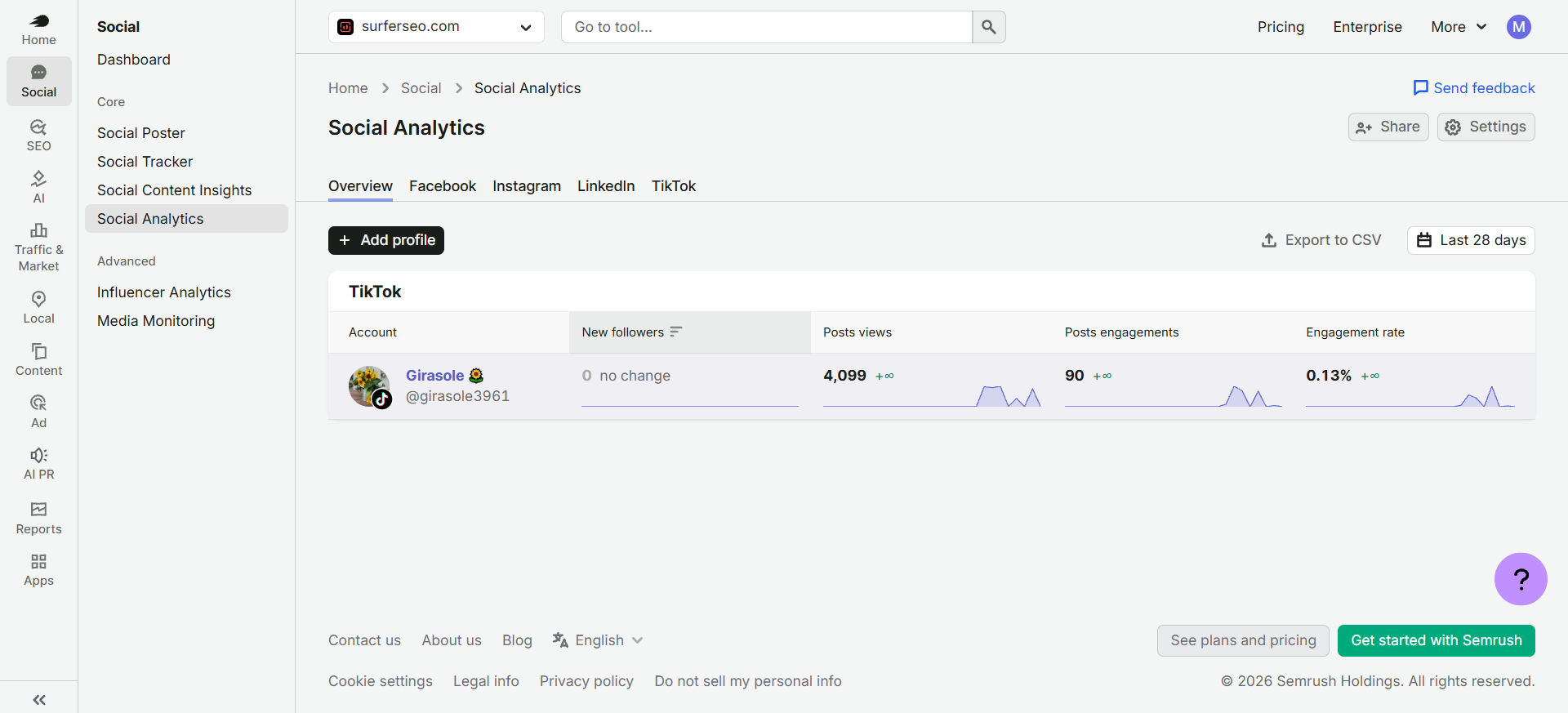
Semrush’s publishing tools cover Instagram, Facebook, TikTok, Pinterest, LinkedIn, and Google Business Profile. But its analytics tools only handle Instagram, Facebook, TikTok, and LinkedIn.
Semrush Social Analytics only reports on Facebook, Instagram, LinkedIn and TikTok
That means you’ll need to use third-party tools or Pinterest’s and Google Business Profile’s native dashboards to track performance across the two channels.
This disconnect causes you to constantly jump between platforms and disrupt your workflows — an issue most other social media management tools don’t have.
The content calendar is slightly unintuitive
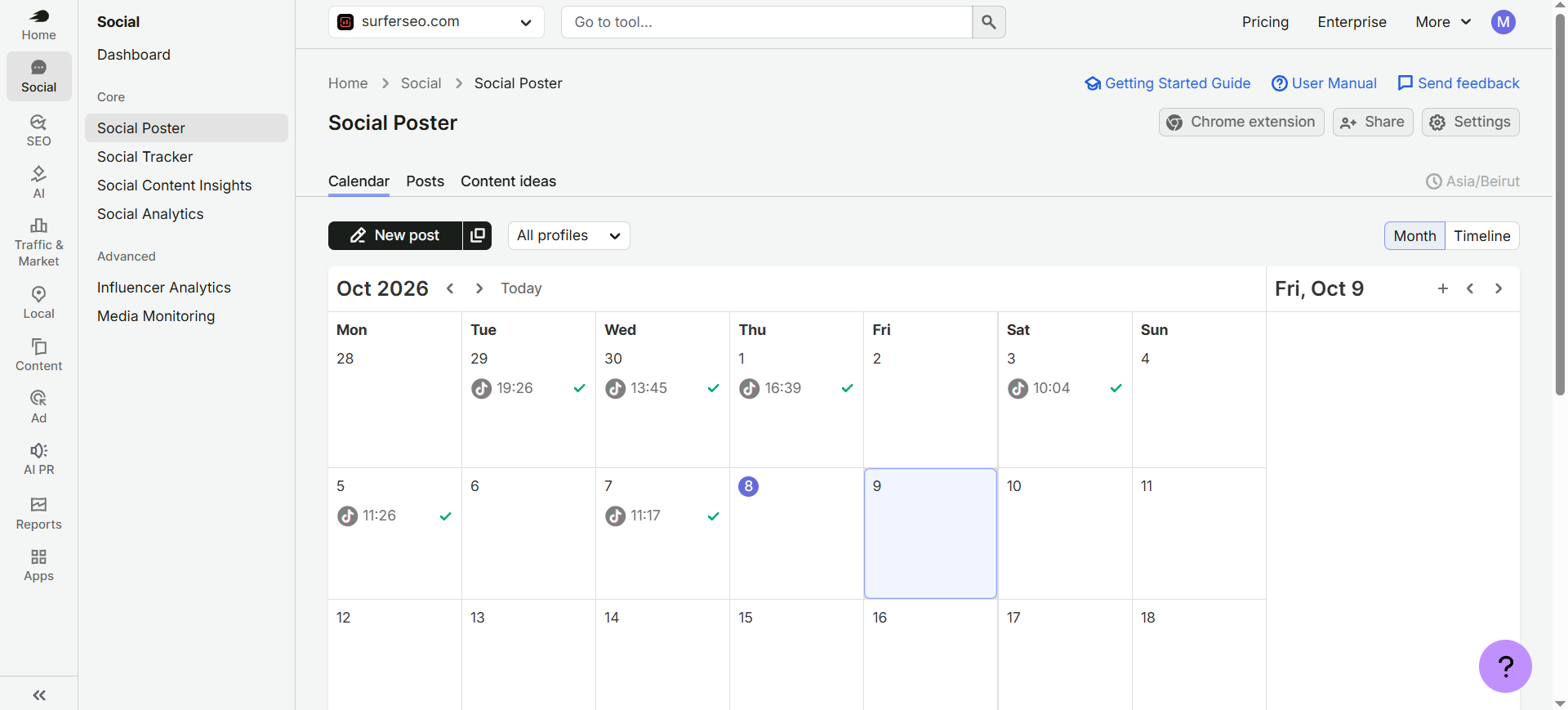
The platform’s calendar lacks drag-and-drop features, while tags and visual previews won’t display in the calendar view itself (only if you click on a particular date). Its filtering options are also rather lackluster: you can only filter between posts by social profile.
The option to browse content by format or tags would’ve definitely been useful.
Semrush Social Poster’s calendar shows only post times, and filters only by profile
This can become problematic for busy calendars: you’ll have to click on each particular post to preview its visuals, while rescheduling content requires you to get back to the composers and select other time slots from there (it takes an unnecessary number of clicks).
UI and ease of use seem to be a platform-wide issue: “The learning curve is probably the biggest downside” – Jodie M., G2
I also noticed some UI quirks, like misleading icons and buttons.
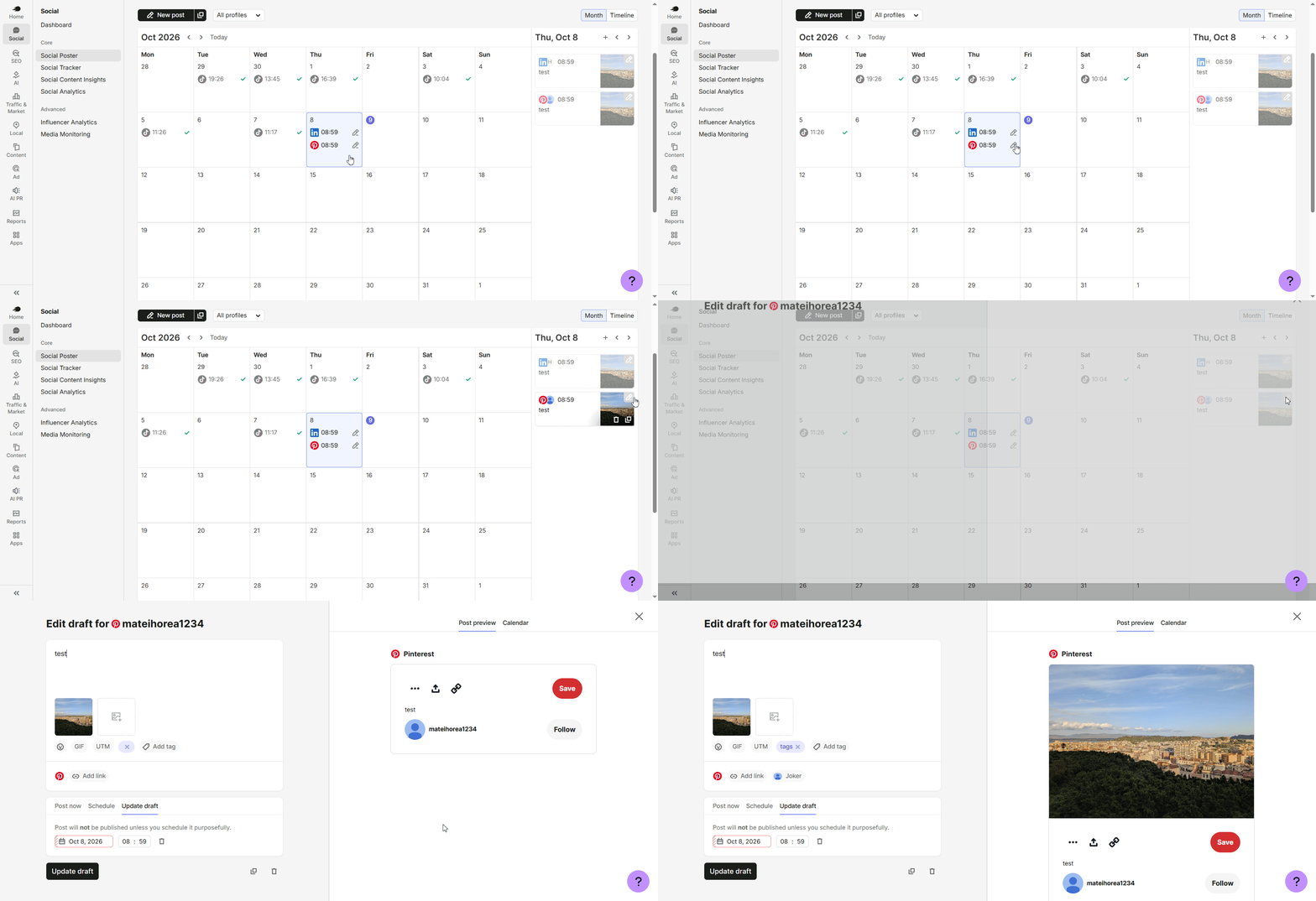
There are editing icons on the calendar next to each draft or scheduled post. But clicking on them won’t actually do anything. Editing a post requires you to click on the same exact icons, but on the preview section on the right-hand side of the calendar.
It may seem like a minor inconvenience, but I feel like such issues add to the platform’s overall tricky UI.
The edit icons on Semrush’s calendar don’t open the post; editing only works from the side panel
The platform lacks critical features other tools do cover
Here are some of the biggest features the Social Media Toolkit currently lacks:
These are features other tools do cover for a similar entry-level price tag (around $20 per user per month).
Plus, Semrush’s social media monitoring and influencer analytics capabilities are locked behind a $250 per month subscription package.
Paywalls are a big pain point in the Semrush community: “One thing I dislike about Semrush is that some of the platform’s most valuable capabilities are heavily gated behind higher-tier plans or additional paid add-ons” – Poulumi M., G2
Semrush alternatives evaluation criteria
The tools that made it to this list had to fit various budget sizes and strike a good balance between versatility and specificity: each platform does a bit of everything, but one might be particularly good for content collaboration, while another may excel in inbox management.
Here’s a quick checklist of all the other criteria I looked for:
Inbox management: Semrush lacks this feature, so I prioritized tools that fill in this gap.
Google Analytics integration: Super useful to gauge social media-generated website traffic and campaign ROI.
Agency workflow support: Features like content approvals, white-label reports, and brand-specific workspaces are ideal for agency work.
Value for money: Semrush can get quite pricey, so I looked for platforms that are more affordable or provide extra features at a similar price tag.
Which tools can replace the Semrush Social Toolkit?
Each of the six tools below can take over the Social Toolkit’s scheduling, and each wins a different job. They’re ranked by fit for an agency running client approvals across many brands, so Planable comes first and Buffer, the free-plan pick, comes last.
1. Planable: for centralized social media management & content creation workflows
Planable is a full-stack social media management solution built specifically around ease of use. The platform’s interface lets marketers handle most day-to-day tasks in just a couple of clicks.
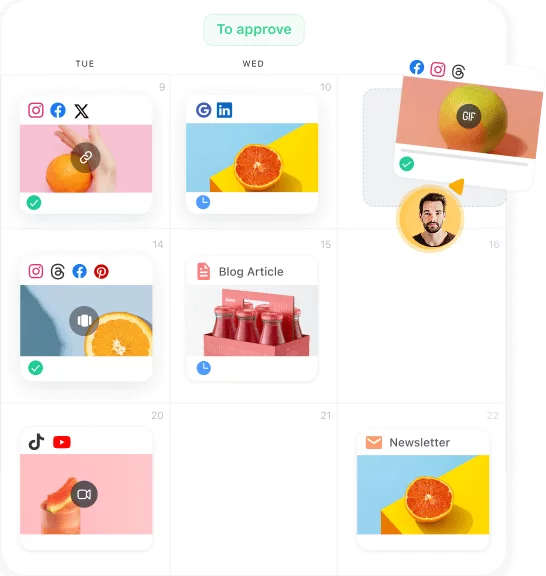
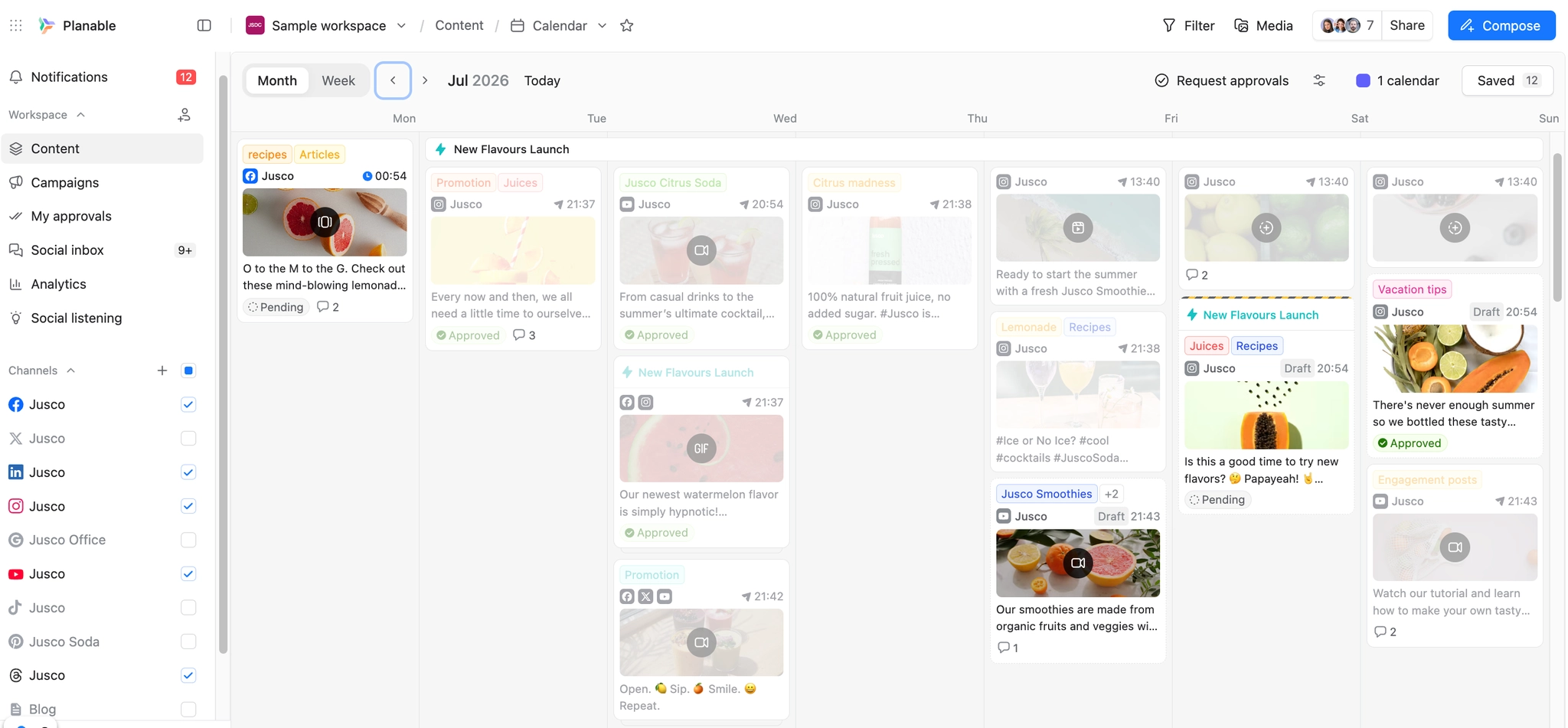
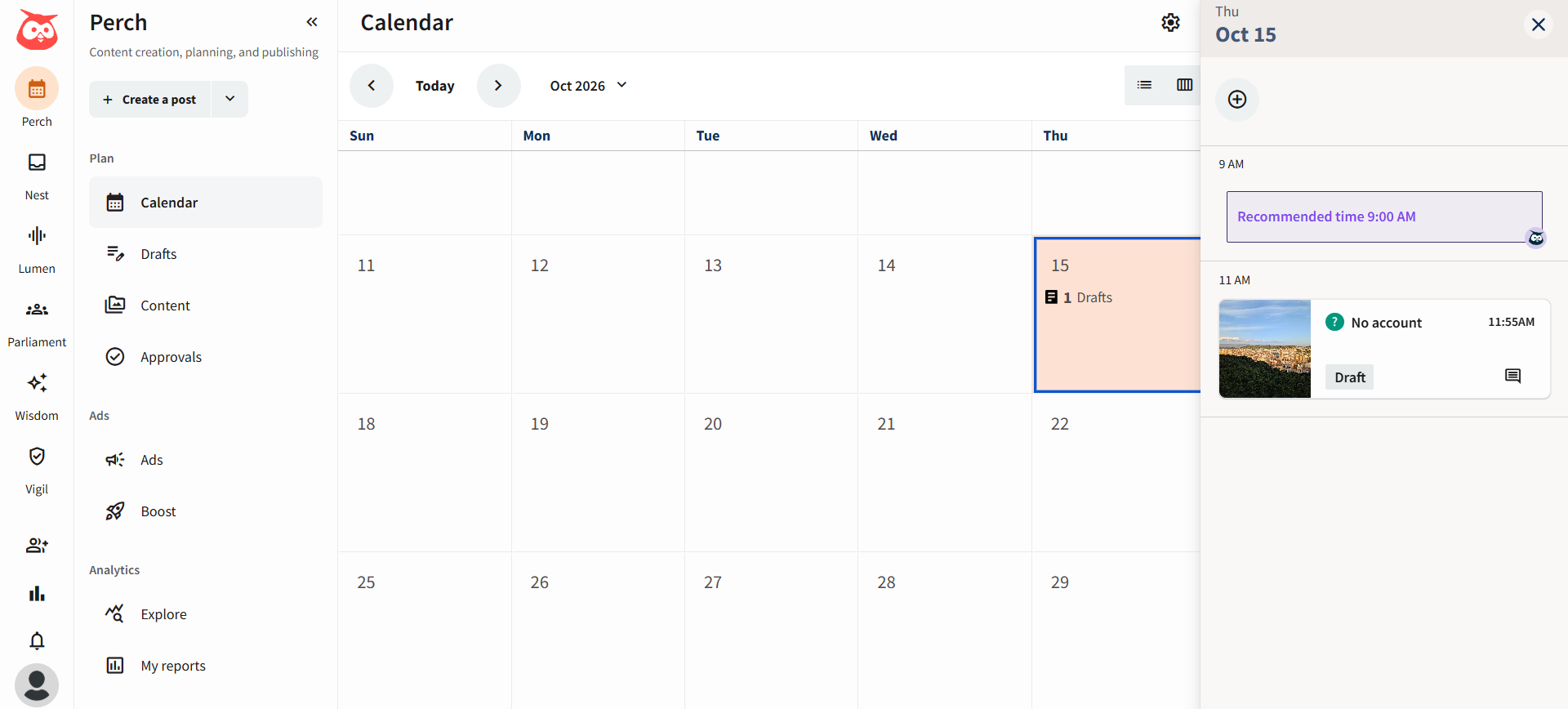
Planable’s calendar lets you schedule and re-schedule posts through a drag-and-drop interface, leave notes and comments, approve posts with one click, and more: all directly in the calendar view. You can also create custom color-coded labels and filter through posts based on author, content format, approval status, and post status; features that Semrush lacks.
Couple that with its native content collaboration, visual editing, and asset management features, and you’ve got a platform that handles end-to-end content workflows: from planning to creation, approval, and scheduling.
Best for: Agencies and multi-location brands that want to centralize social and content workflows, and need rigorous approval features.
Planable covers a similar feature set to Semrush, and also brings some extra tools to the table:
Content calendar: A drag-and-drop calendar with color-coded labels, visual previews, and direct access to collaboration tools like notes and one-click approvals.
Social media analytics: Available through the Analytics add-on at $14 per workspace per month (Instagram, YouTube, TikTok, LinkedIn, and GBP analytics included).
Social media listening: An add-on at $99 per workspace per month. Semrush reserves Media Monitoring for its Business plan, at $250 per month, billed monthly.
Standout features:
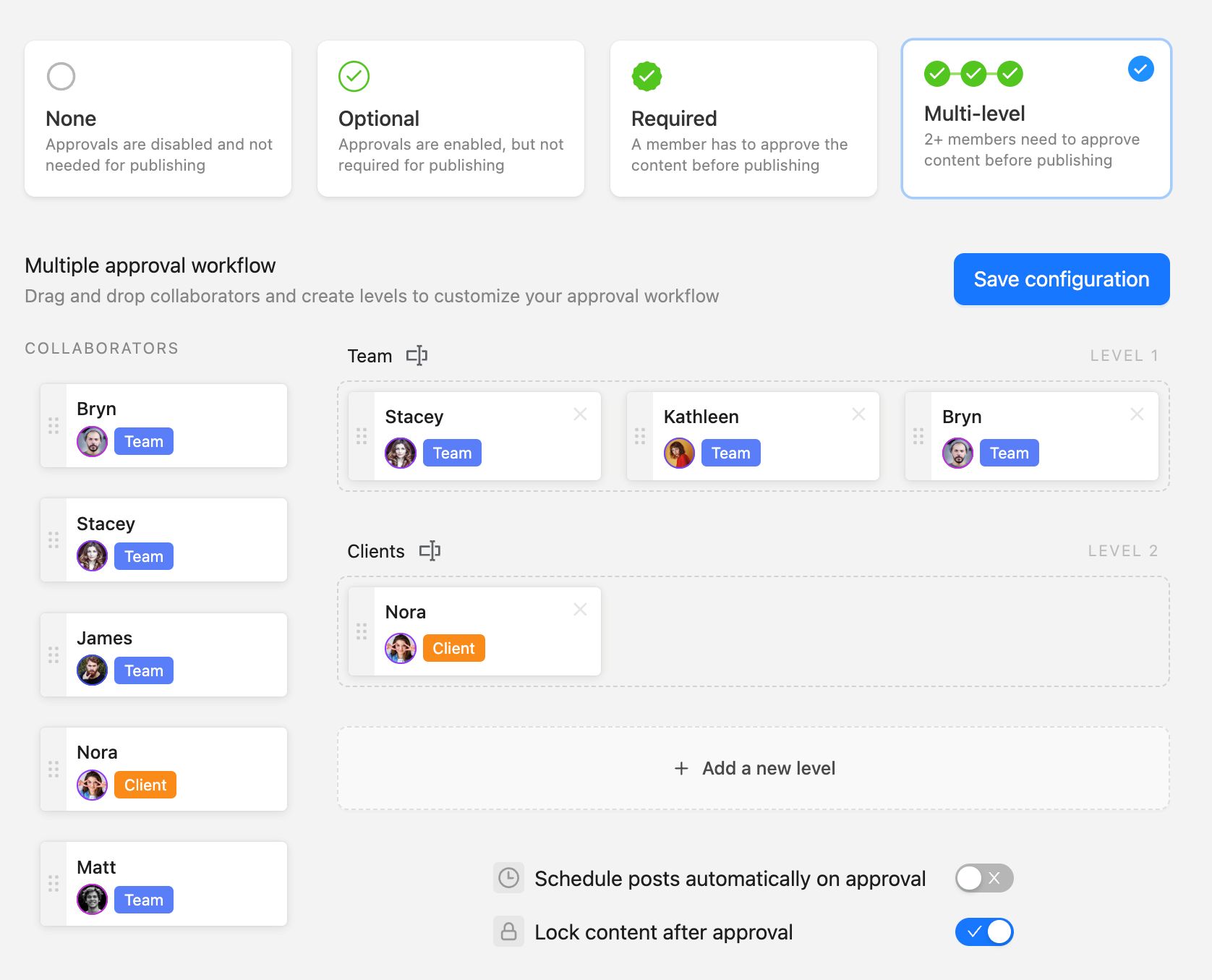
Approval workflows: Select between optional, required, and multi-level approvals (where multiple reviewers have to give the green light one by one).
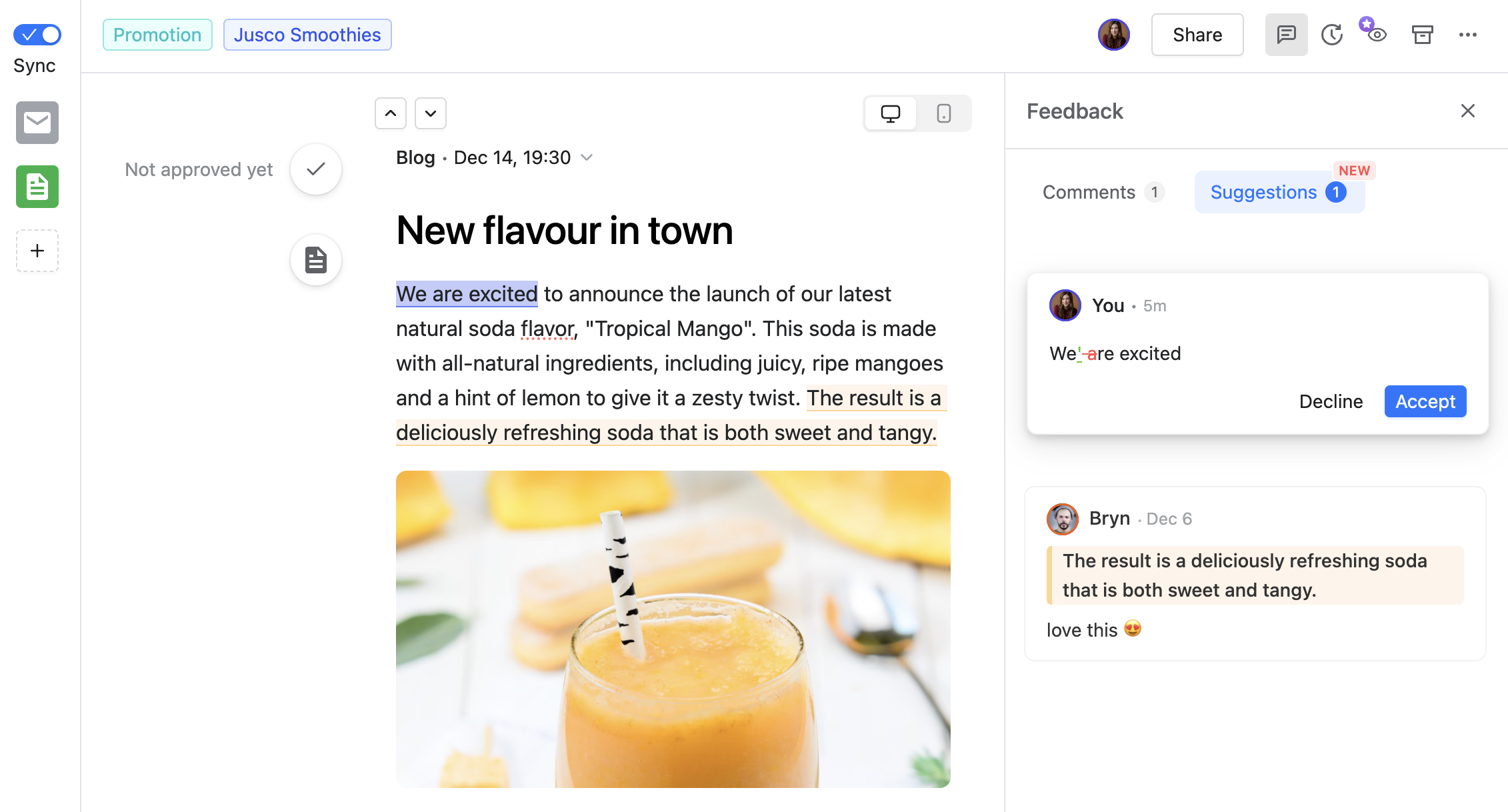
Content collaboration: Work on the same post with other team members in real-time, add direct comments and annotations, and clear text suggestions on each post.
Media library: Store visuals (images, videos, graphics, logos) directly in Planable and tweak assets through its native visual editor or Canva integration.
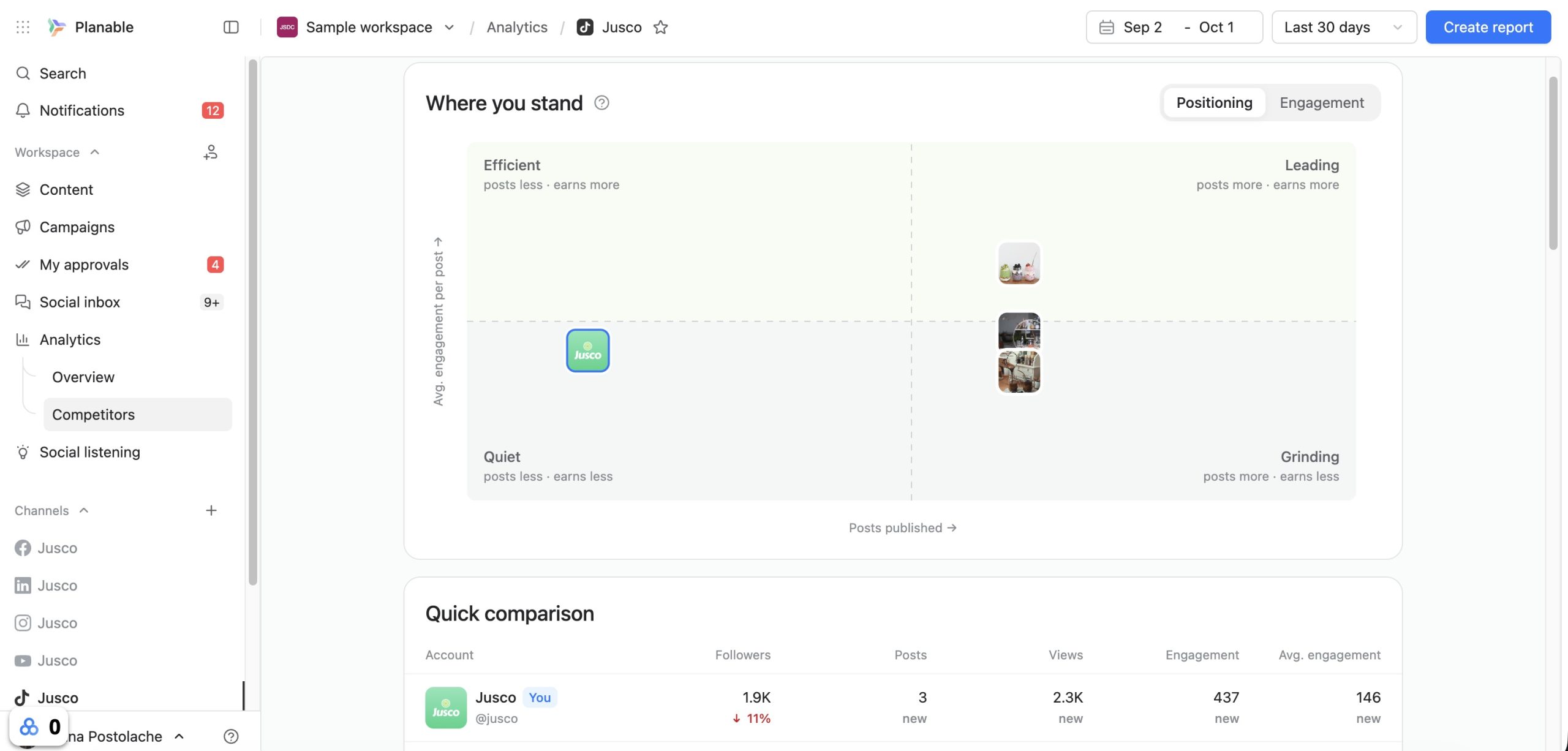
Competitor Analytics: Track competitor profiles across five networks and benchmark them against your own pages.
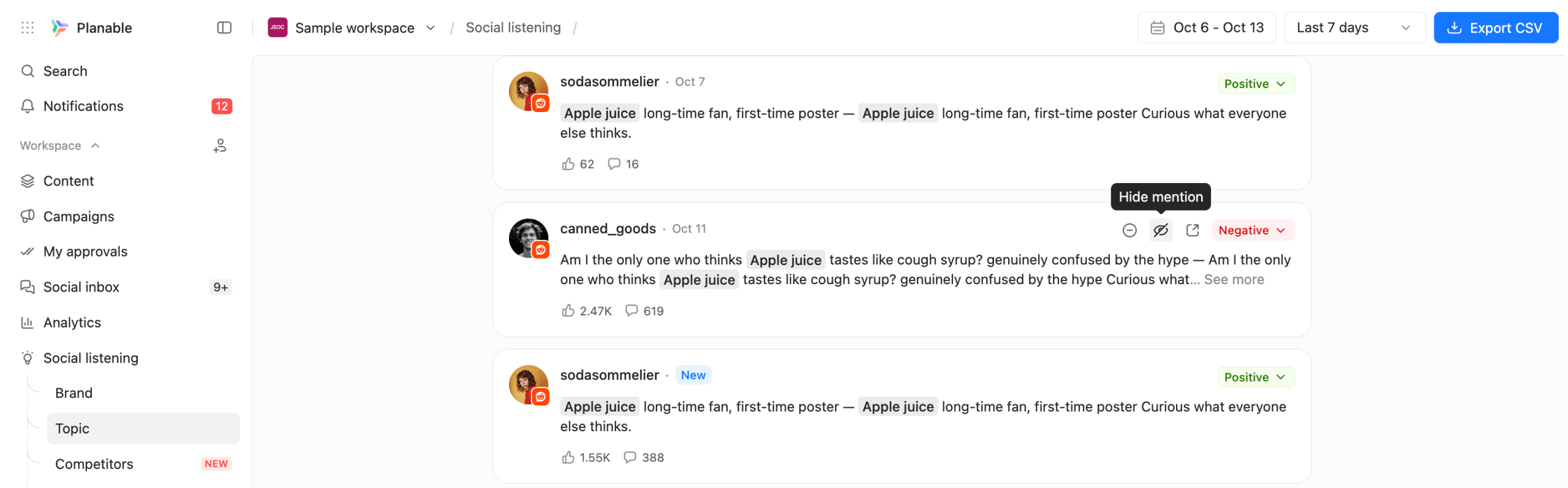
Social Listening: Monitors public mentions of your brand name or custom keywords across 8 sources.
Integrations: Most major social networks (X, Threads, and Pinterest included), Claude, ChatGPT, and Gemini MCP connectors, plus Canva, Zapier, and more.
Pricing: Basic costs $39 per workspace per month, billed monthly, or $390 per workspace per year, billed annually, with 4 pages per workspace. Pro adds required approval and 10 pages per workspace for $59 per workspace per month, billed monthly, or $590 per year, billed annually. Enterprise starts at $200 per month, billed monthly, or $2,500 per year, billed annually.
Social Inbox is a $9 add-on per workspace per month. The free trial has no time limit and caps at 50 posts in total.
Planable pros and cons
Pros
Cons
Internal notes and posts: Pro and Enterprise plans let you hide posts and comments away from your clients’ view.
No white labeling: White labeling is not offered, so agency-branded client reports need another tool.
Top-notch collaboration features: Direct comments, annotations, and clear text suggestions make Planable’s composer comparable to Google Docs.
Does have add-ons: Competitor analytics, Social listening, and inbox management cost extra.
Speeds up content creation and approval processes: Emily D. of Forward Progress, Inc, an agency customer, significantly cut content development times. As per her testimonial: “We literally went from a whole week of back and forth to two days and done”.
Pros
Internal notes and posts: Pro and Enterprise plans let you hide posts and comments away from your clients’ view.
Top-notch collaboration features: Direct comments, annotations, and clear text suggestions make Planable’s composer comparable to Google Docs.
Speeds up content creation and approval processes: Emily D. of Forward Progress, Inc, an agency customer, significantly cut content development times. As per her testimonial: “We literally went from a whole week of back and forth to two days and done”.
Cons
No white labeling: White labeling is not offered, so agency-branded client reports need another tool.
Does have add-ons: Competitor analytics, Social listening, and inbox management cost extra.
Takeaway: Planable’s centralized dashboards and advanced collaboration tools make it one of the best options for agencies looking to speed up content workflows with no compromise on quality.
2. Agorapulse: for teams that prioritize inbox management and moderation
Agorapulse is a solid Semrush alternative if you’re looking for a social media management tool with particularly powerful social inbox and moderation features.
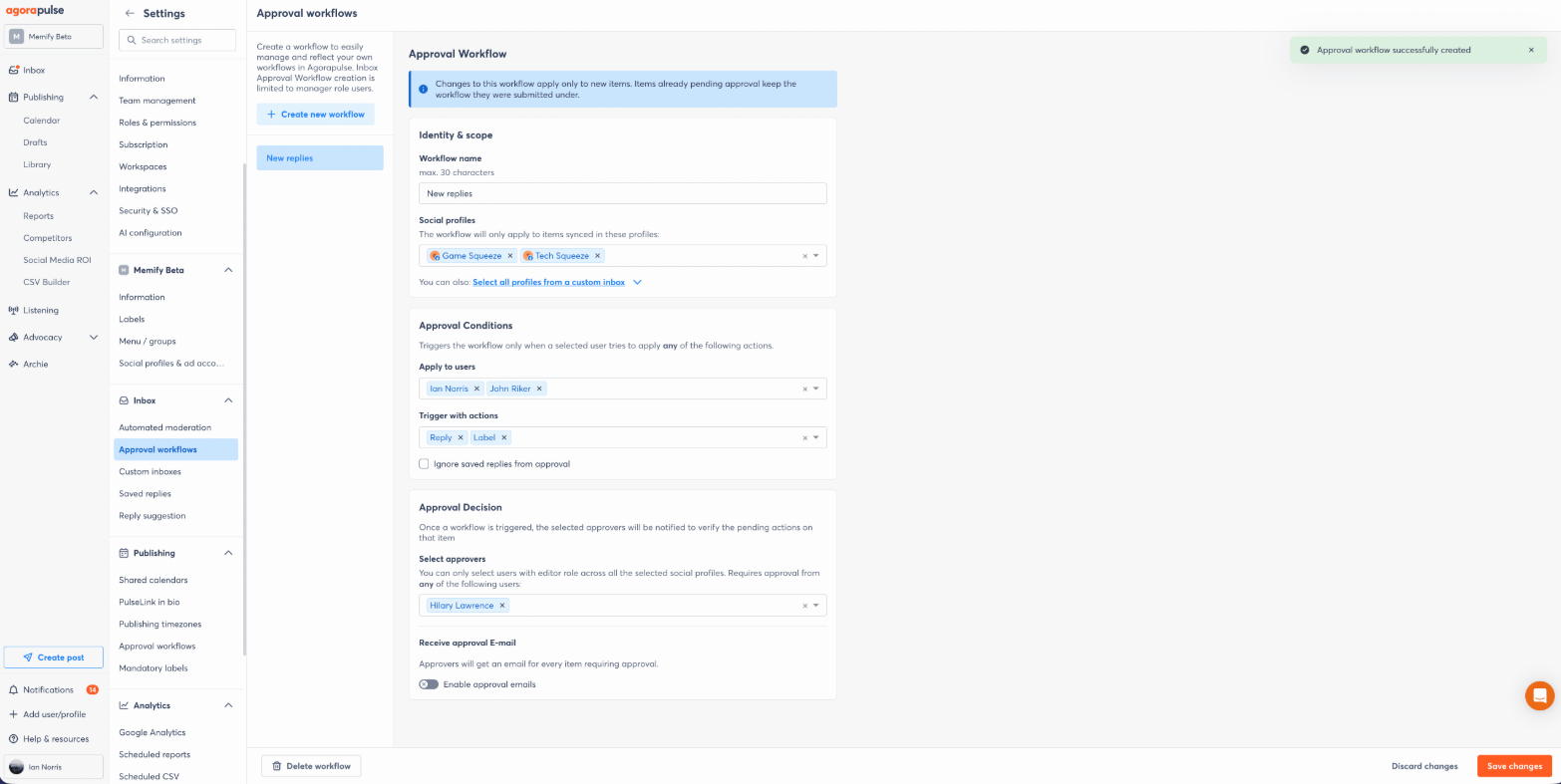
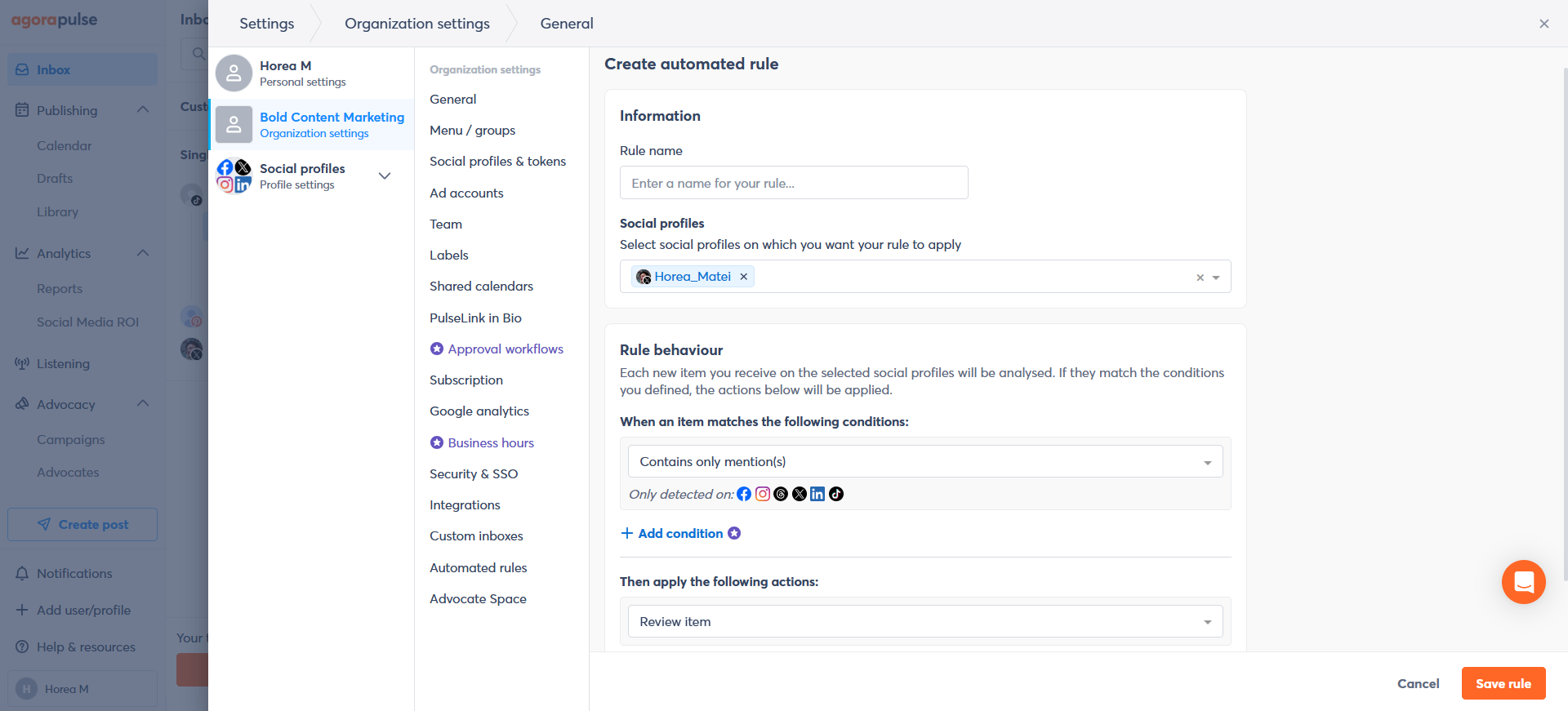
Agorapulse’s latest updates made the platform’s inbox tools even better: you can set up approvals for particular inbox actions like comment replies, deletes, and likes. I found this feature perfect for agencies that want an extra layer of control when managing a client’s social inbox.
Standout features:
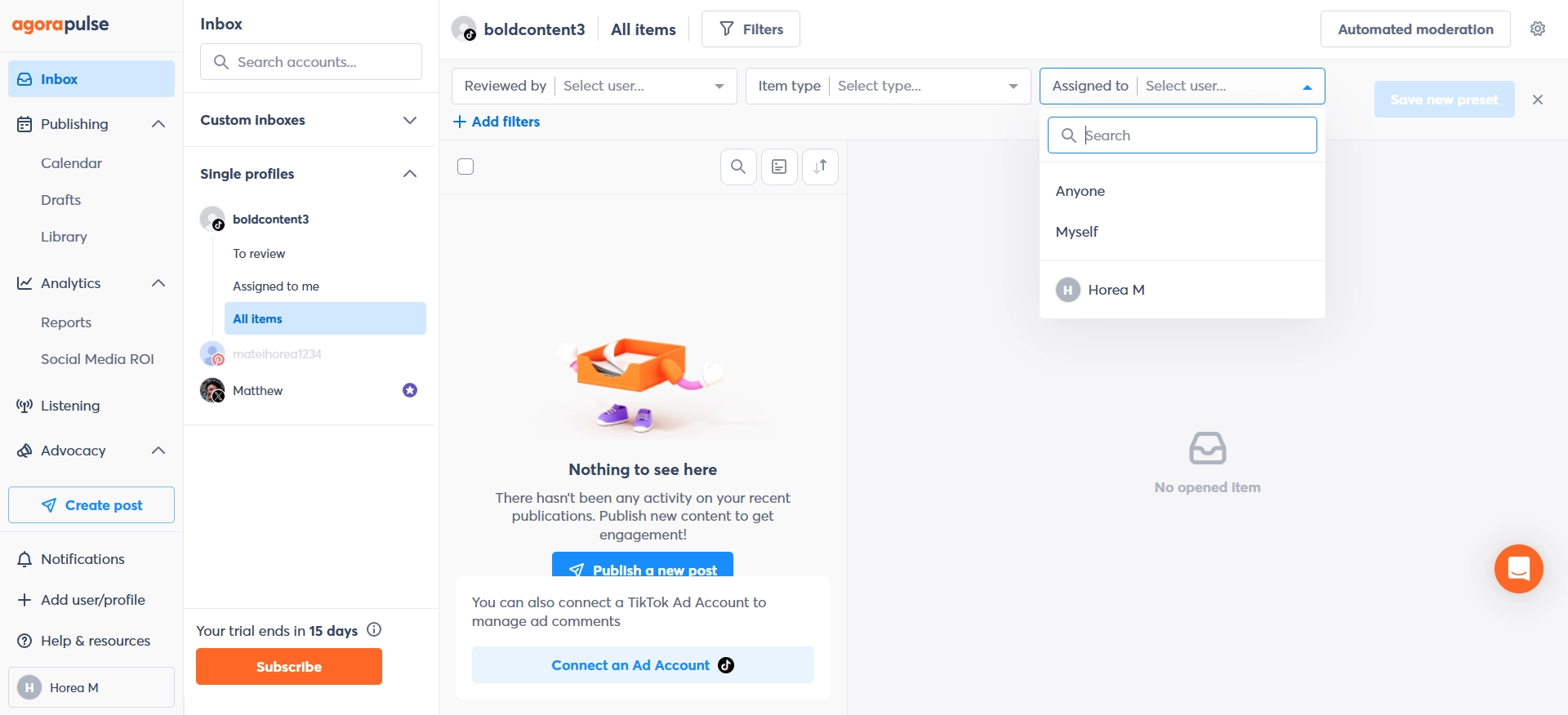
Moderation workflows: Set up automated keyword-based moderation workflows that delete or hide spam comments, assign particular comments to team members, and label messages according to your particular criteria.
ROI reports: Connect Agorapulse with Google Analytics to track social campaign ROI.
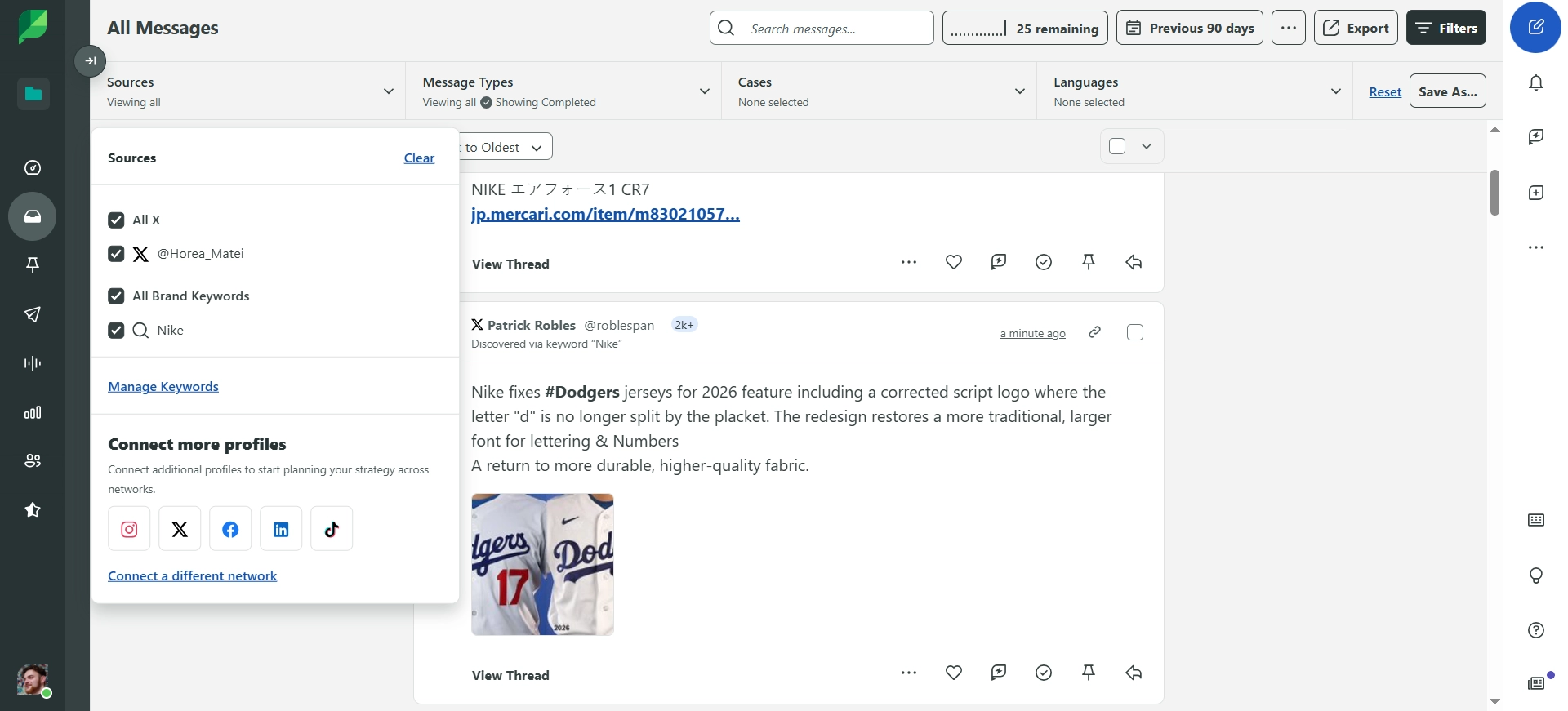
Competitor listening: Benchmark competitor brand mentions and share of voice across six sources (Reddit and web sources included).
Content publishing: Schedule unlimited posts across multiple networks (and profiles) in one go.
Integrations: ChatGPT and Claude MCPs, Google Analytics, plus HubSpot, Salesforce, Slack, and MS Teams (available in the Custom plan).
Pricing: Agorapulse starts at $79 per user per month with the Standard plan. The Professional plan starts at $119, while Advanced costs $149 per user per month, billed annually. All three plans include 10 social profiles. There is also a customized pricing package.
You can try the platform for free for 30 days.
Agorapulse pros and cons
Pros
Cons
Centralized reviews: Reviews from Google Business Profile and other connected networks land in the same inbox as comments and DMs, which I find super useful for local or multi-location businesses.
Approvals locked behind the Professional plan: Basic approvals are not available in the Standard plan. SSO, custom roles, and multi-step approval workflows are also locked behind the custom tier.
Collaboration tools: Collaborate on social media posts and inbox messages through notes, and set up approval workflows.
Ad-comment monitoring paywalled too: Ad-comment monitoring, link in bio and Instagram product tagging start at Professional, not Standard.
Pros
Centralized reviews: Reviews from Google Business Profile and other connected networks land in the same inbox as comments and DMs, which I find super useful for local or multi-location businesses.
Collaboration tools: Collaborate on social media posts and inbox messages through notes, and set up approval workflows.
Cons
Approvals locked behind the Professional plan: Basic approvals are not available in the Standard plan. SSO, custom roles, and multi-step approval workflows are also locked behind the custom tier.
Ad-comment monitoring paywalled too: Ad-comment monitoring, link in bio and Instagram product tagging start at Professional, not Standard.
Takeaway: I personally think Agorapulse really makes up for Semrush’s lack of social inbox management tools. Plus, the platform’s moderation workflows help teams keep their clients’ comment sections clean and spam-free.
3. Hootsuite: for enterprise listening and trend forecasting
Hootsuite is a social media management suite with proprietary AI toolsets, each designed to handle different social media tasks.
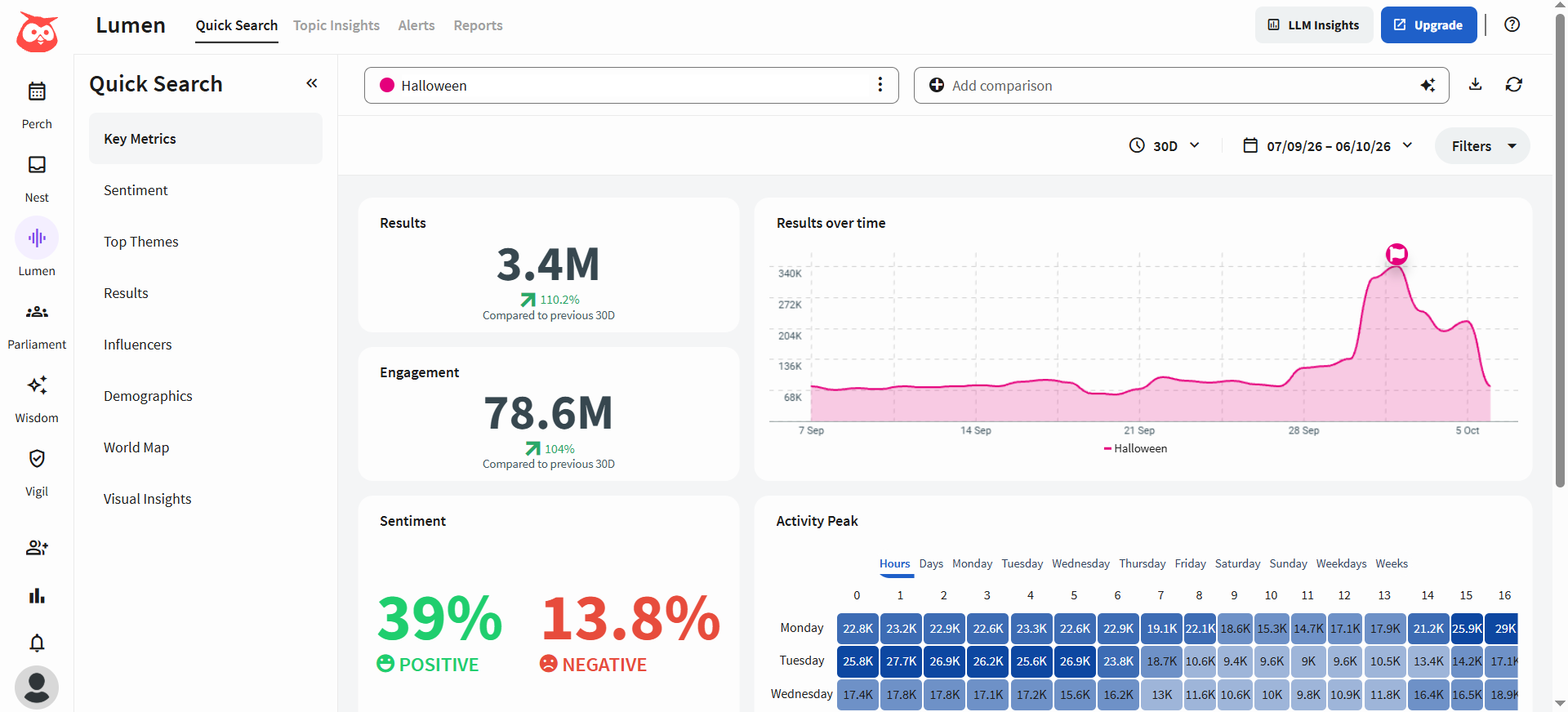
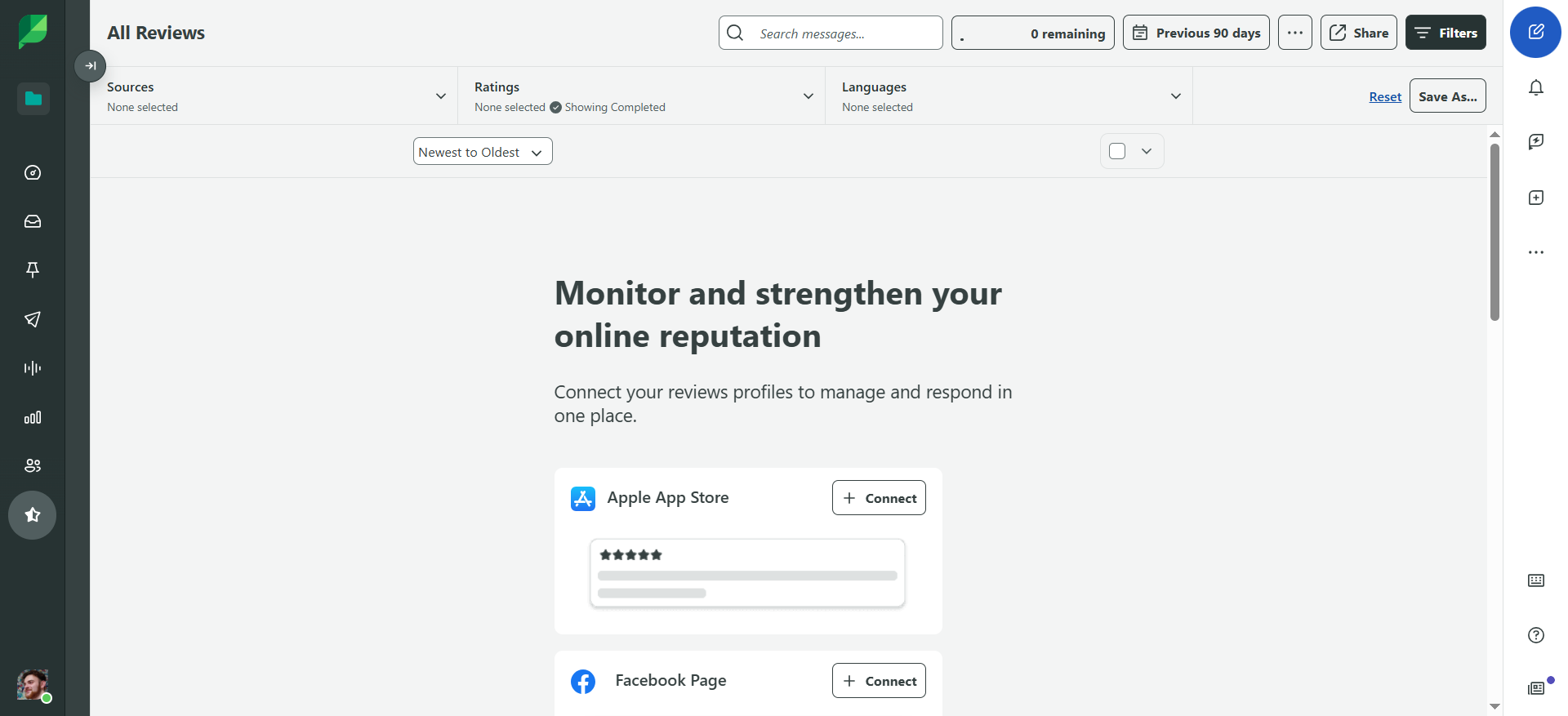
I found Lumen to be probably one of the most in-depth social listening tools on the market. It pulls conversations from across 30+ social networks and 150 million+ web sources (Twitch, Reddit, and Vimeo included) and sets up detailed analytics dashboards covering sentiment, common themes, and demographics, each under its own dedicated tab.
Plus, Lumen identifies text, image, video, and audio-based brand mentions: perfect for enterprise-level companies looking to gauge audience opinions across specific brands or topics as accurately as possible.
Standout features:
AI-powered content planning: Get ideal posting time suggestions and hashtag recommendations based on historical social media performance data.
Competitor and industry benchmarks: Benchmark content performance, follower growth, and posting frequency against your top competitors or industry averages.
Advertising campaign management: Schedule and report on ad campaigns across Facebook, Instagram, and X, plus automatically boost high-performing organic posts to maximize reach.
Social listening: Benchmark brand mentions against competitors, discover and forecast trending topics, and automatically detect peaks in volume or engagement.
Integrations: Most major social networks (Bluesky included), plus an app marketplace with 100+ third-party integrations.
Pricing: Hootsuite sells plans per user: Standard is $99, Professional $199 and Advanced $399 per user per month, billed annually. Standard manages up to 10 social accounts, while Professional and Advanced are unlimited. The free trial lasts 14 days with no credit card required.
Hootsuite pros and cons
Pros
Cons
Listening data coverage and depth: Lumen’s listening data sources are almost on par with dedicated market research platforms.
Occasional bugs and high pricing: Alyssa P.’s G2 review highlights a drawback: “Accounts randomly disconnect, especially LinkedIn. Plan limits are also frustrating. Adding extra team seats costs a lot.”
Genuinely time-saving features: Alyssa P., a senior social media manager, put it this way on G2: “It saves me six to eight hours each week on scheduling and comments”.
Content collaboration and approvals behind a paywall: They’re only available starting from the Advanced plan, which costs $399 per user per month.
Pros
Listening data coverage and depth: Lumen’s listening data sources are almost on par with dedicated market research platforms.
Genuinely time-saving features: Alyssa P., a senior social media manager, put it this way on G2: “It saves me six to eight hours each week on scheduling and comments”.
Cons
Occasional bugs and high pricing: Alyssa P.’s G2 review highlights a drawback: “Accounts randomly disconnect, especially LinkedIn. Plan limits are also frustrating. Adding extra team seats costs a lot.”
Content collaboration and approvals behind a paywall: They’re only available starting from the Advanced plan, which costs $399 per user per month.
Takeaway: Hootsuite fits brands that need listening data coverage and depth. The platform goes beyond text-based mentions and tracks data up to 13 months old.
4. Sprout Social: for brand reputation management and customer care
Sprout Social is a monitoring-first social media management platform, with keyword and review tracking across social media and review platforms like Trustpilot, Yelp, and TripAdvisor.
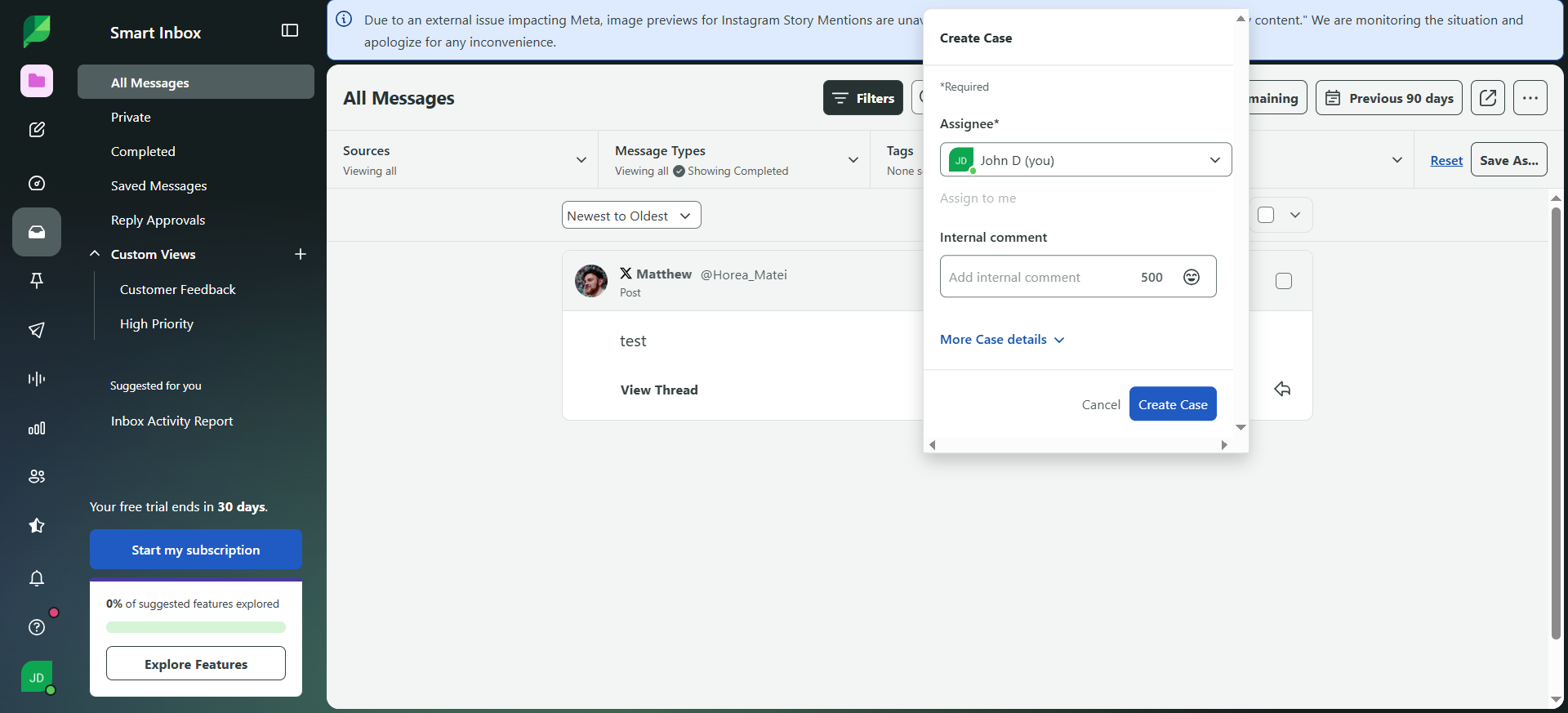
The platform also blends inbox management and customer care tools: you can monitor messages across multiple channels within a consolidated inbox, and turn critical feedback into customer support cases whenever needed.
Best for: In-house teams that monitor social conversations for customer care and relationship management.
Sprout Social includes numerous features for social media teams that mainly prioritize customer support: CSAT and NPS surveys, message spike alerts, and case management features. Plus, its built-in contact management tools let you store customer records, track conversations, and leave notes.
Standout features:
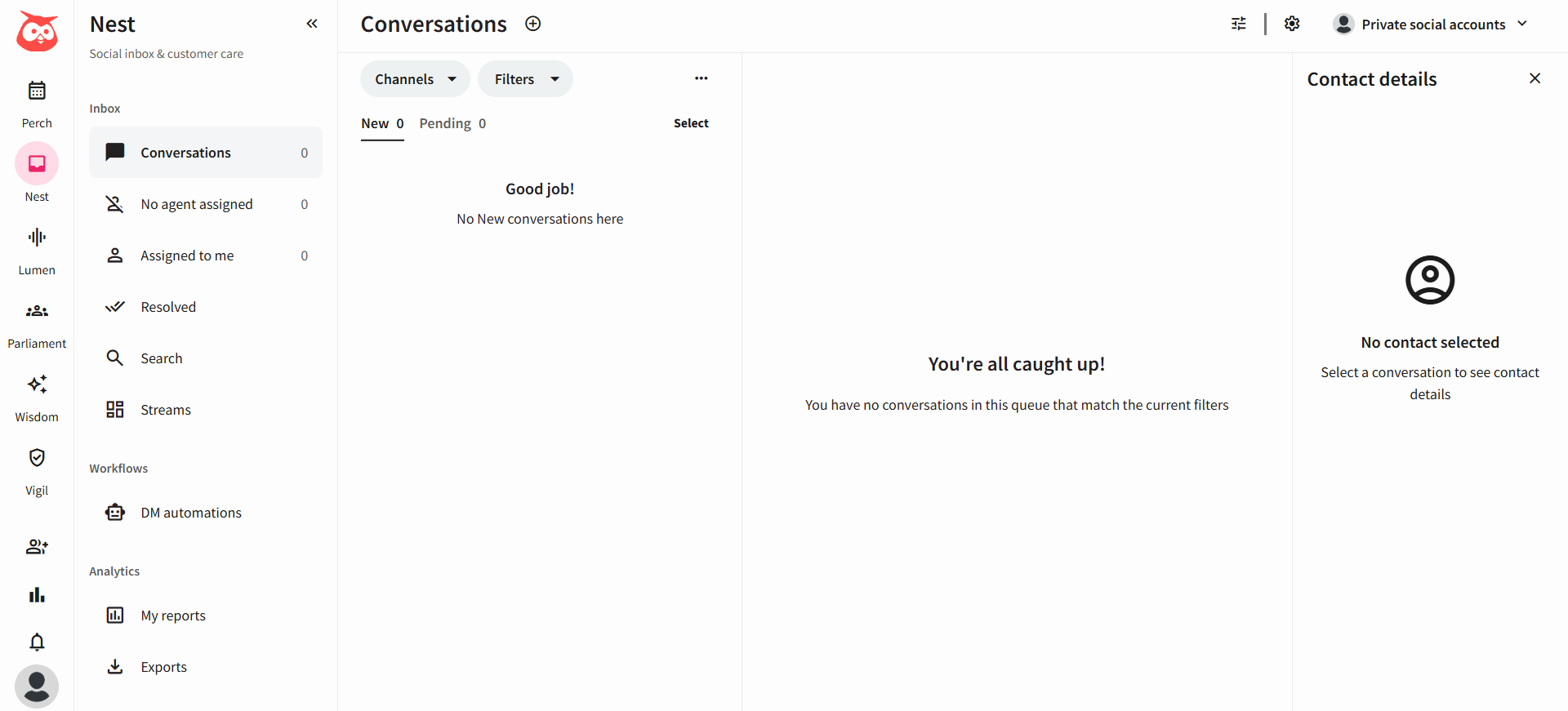
Consolidated inbox: Answer messages from one consolidated inbox with collaboration tools (leave notes and route messages to other team members).
Organic and paid performance reports: Run reports covering organic and paid advertising campaigns to pinpoint which strategies generate the best results.
External approvals: Add clients and external stakeholders to your approval workflows; no account setups needed.
Social chatbot builders: Set up chatbots across Facebook and X to automatically handle routine inquiries.
Integrations: Most major social networks (Reddit, Snapchat, and Threads included), Google Analytics, plus HubSpot, Salesforce, and Zendesk (in the top-tier plan).
Pricing: Sprout Social starts with Essentials at $79 per seat per month, billed annually, or $99 per seat per month, billed monthly. The higher tiers are only available annually with Standard at $199, Professional at $299, and Advanced at $399 per user per month. Enterprise has custom pricing.
Essentials and Standard connect up to 5 social profiles. Every plan includes 100 monthly AI agent credits per seat. The free trial runs for 30 days.
Sprout Social pros and cons
Pros
Cons
Google Analytics integration available by default: In contrast to some other tools, Sprout Social lets you integrate GA4 reporting starting from the entry-level plan.
Extra add-ons bump up the final price tag: Listening and Premium Analytics are sold as individual add-ons on Standard and up.
Standalone Influencer Marketing Add-on: Sprout sells a standalone influencer marketing tool. In contrast, Semrush includes influencer analytics on its top-tier core plan.
Limited social profiles on entry-level plans: The Essentials and Standard plans only allow for up to five social profiles.
Pros
Google Analytics integration available by default: In contrast to some other tools, Sprout Social lets you integrate GA4 reporting starting from the entry-level plan.
Standalone Influencer Marketing Add-on: Sprout sells a standalone influencer marketing tool. In contrast, Semrush includes influencer analytics on its top-tier core plan.
Cons
Extra add-ons bump up the final price tag: Listening and Premium Analytics are sold as individual add-ons on Standard and up.
Limited social profiles on entry-level plans: The Essentials and Standard plans only allow for up to five social profiles.
Takeaway: Sprout Social is particularly useful for social sales and customer support teams. Still, its massive price tag is a big drawback.
5. SocialPilot: for budget-conscious agencies that need white-label reports
SocialPilot is a flat-priced social media management tool with an account cap on each plan.
SocialPilot offers pretty good value for agencies looking for a white-labeled platform. Its Premium plan starts at $85 per month with six users and 25 social accounts included: it covers white-label reports, dedicated client approval workflows, and full access to the platform’s core features.
If you want to white-label the entire platform, you’ve got the Ultimate plan at $170 per month, with unlimited users and 50 social accounts.
Standout features:
White-label reports: Premium plan unlocks white-label reports for agencies.
Smart Queues: Automatically schedule cross-network posts based on platform-specific ideal posting times.
Inbox automation: Use trigger-based workflows to automate routine customer inquiries or route messages to the appropriate team member.
Internal & external approvals: Set up distinct manager and client approval workflows.
Integrations: Most major social networks (Threads and Bluesky included), Slack, Canva, plus MCPs for ChatGPT, Claude, Perplexity, and Cursor.
Pricing: Essentials costs $30 per month, billed monthly, or $25 per month, billed annually. On monthly billing, Standard runs $50 per month and Premium $100 per month. Billed annually, Standard comes to $42 per month and Premium to $85 per month.
Essentials covers 7 social accounts, Standard 15 and Premium 25, and the plan above Premium raises the cap to 50. For client work, price Premium against the other tools here: Essentials includes one user, Standard three and Premium six. The free trial lasts 14 days with no credit card required.
SocialPilot pros and cons
Pros
Cons
Platform-wide white-labeling: You can go beyond reports and white-label the entire SocialPilot interface.
Approvals locked behind Premium: Client approval workflows are only available on the Premium plan.
Local business-specific add-ons: SocialPilot offers extra products covering review management (for GBP, Trustpilot, Yelp, etc.) and managing online listings.
Report customization has limits: James H., a CTO at a small business, noted on G2: “Reporting customisation is somewhat limited compared to larger enterprise tools.”
Pros
Platform-wide white-labeling: You can go beyond reports and white-label the entire SocialPilot interface.
Local business-specific add-ons: SocialPilot offers extra products covering review management (for GBP, Trustpilot, Yelp, etc.) and managing online listings.
Cons
Approvals locked behind Premium: Client approval workflows are only available on the Premium plan.
Report customization has limits: James H., a CTO at a small business, noted on G2: “Reporting customisation is somewhat limited compared to larger enterprise tools.”
Takeaway: SocialPilot is the pick here for white-label reports, the one agency need on this list that Planable doesn’t cover.
6. Buffer: for small teams that want a free plan and per-channel pricing
Buffer is a budget-friendly social media tool with built-in publishing, analytics, and inbox management features.
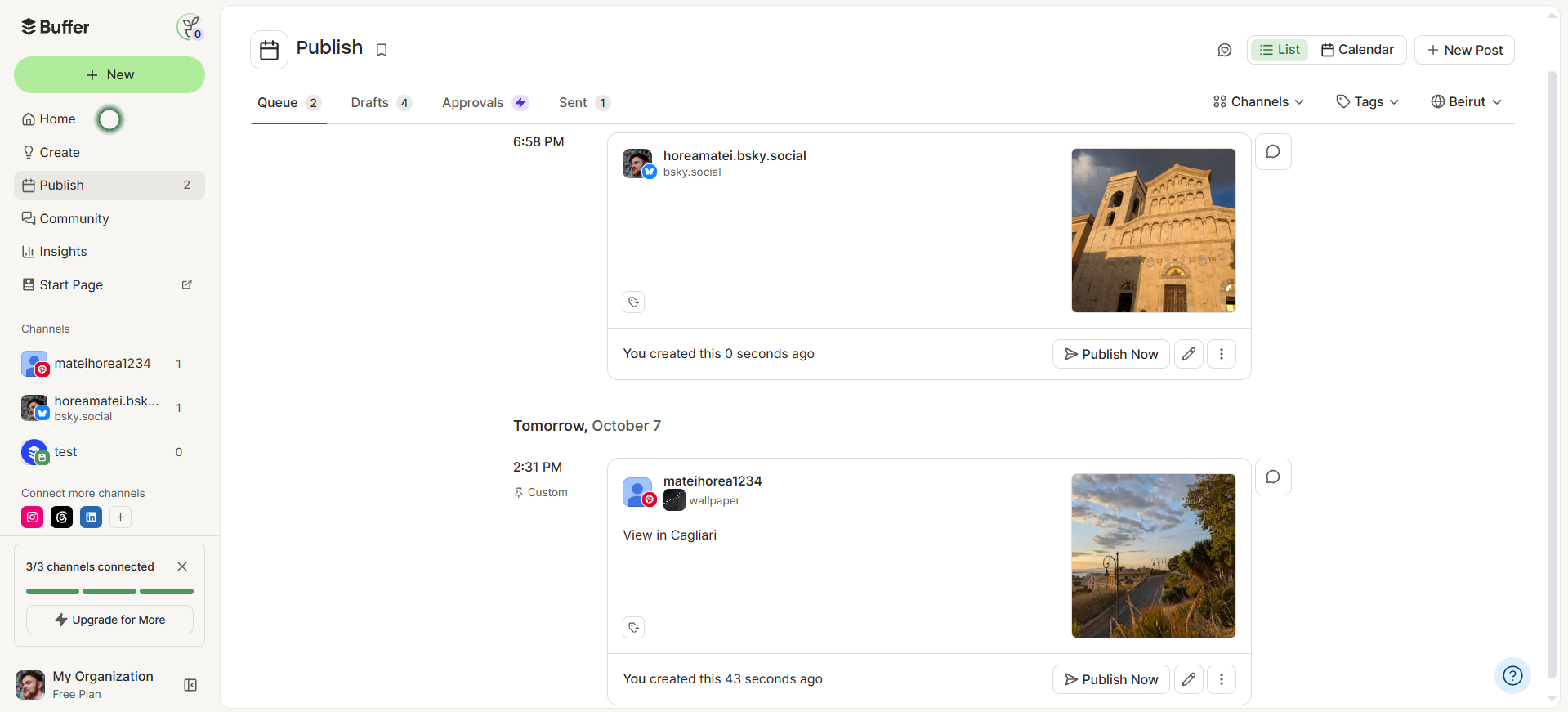
I actually used Buffer’s free plan on some of my side projects, and it’s pretty solid: it covers inbox management with Google Business Profile support, a drag-and-drop calendar with content queuing, analytics, and a handy micro-site builder.
Standout features:
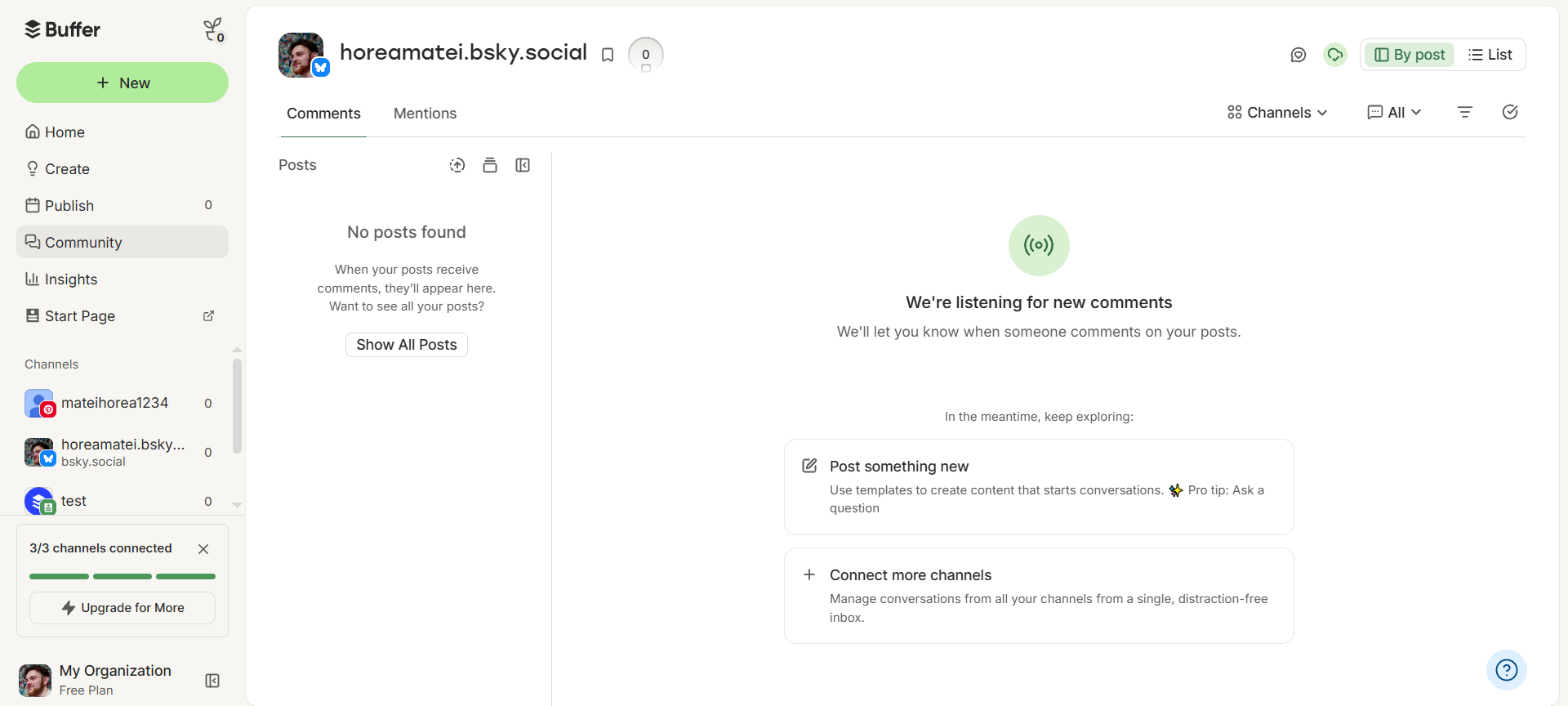
Community inbox: The Community inbox covers 10 channels (Mastodon, GBP, Bluesky included), plus a scoring system that evaluates your reply consistency and speed.
Channel groups: You can group multiple channels (like Threads, X, and Bluesky) to schedule cross-network posts that share similar formats a bit faster.
Hashtags and first comments: Get advanced analytics, a hashtag manager and first comment scheduling on Essentials.
AI performance summaries and suggestions: Get active AI recommendations based on weekly social media performance data.
Integrations: Buffer connects to Claude and other AI assistants over the Model Context Protocol, and lets you manage content from Codex.
Pricing: Buffer charges per channel: Essentials is $5 and Team $10 per channel per month, billed annually, or $60 and $120 per channel per year. Paid plans come with a 14-day free trial.
Buffer pros and cons
Pros
Cons
WordPress and Substack support: Buffer’s native integrations with WordPress and Substack let you schedule long-form blog posts across the two platforms.
Per-channel pricing model can get expensive: Starting at $5 per channel per month, Buffer’s pricing can match more advanced tools if you plan on setting up an omni-channel presence.
A free queue that refills: The Free plan allows 10 scheduled posts per channel, and a slot frees up again once a post is published.
Analytics depth: Sneh M., a senior customer success advisor, flagged on G2 that deeper analytics and competitor tracking “are either missing or only available on higher-tier plans.”
Pros
WordPress and Substack support: Buffer’s native integrations with WordPress and Substack let you schedule long-form blog posts across the two platforms.
A free queue that refills: The Free plan allows 10 scheduled posts per channel, and a slot frees up again once a post is published.
Cons
Per-channel pricing model can get expensive: Starting at $5 per channel per month, Buffer’s pricing can match more advanced tools if you plan on setting up an omni-channel presence.
Analytics depth: Sneh M., a senior customer success advisor, flagged on G2 that deeper analytics and competitor tracking “are either missing or only available on higher-tier plans.”
Takeaway: I would say Buffer is the option to go for if you’re running a small project or business. But its channel-based model bumps up the cost if you plan on posting on more than three social networks.
Can Planable and SE Ranking replace Semrush completely?
Yes, especially for full-stack marketing teams or agencies. SE Ranking measures both organic and AI search optimization efforts: it handles keyword and prompt tracking, as well as backlink and citation source analytics.
Its competitive research and content optimization tools also help maximize online visibility across both search types. As such, SE Ranking’s feature set makes the platform comparable to the Semrush One tool suite, and at a more affordable price tag. SE Ranking’s Core package starts at $103.20 per month (billed annually), while Semrush One starts at $165.17.
As for Planable, its intuitive calendars, workspace management, top-notch content collaboration and approval tools, coupled with its analytics, social listening, and inbox tools, make it a super capable contender to Semrush’s Social Media toolkit.
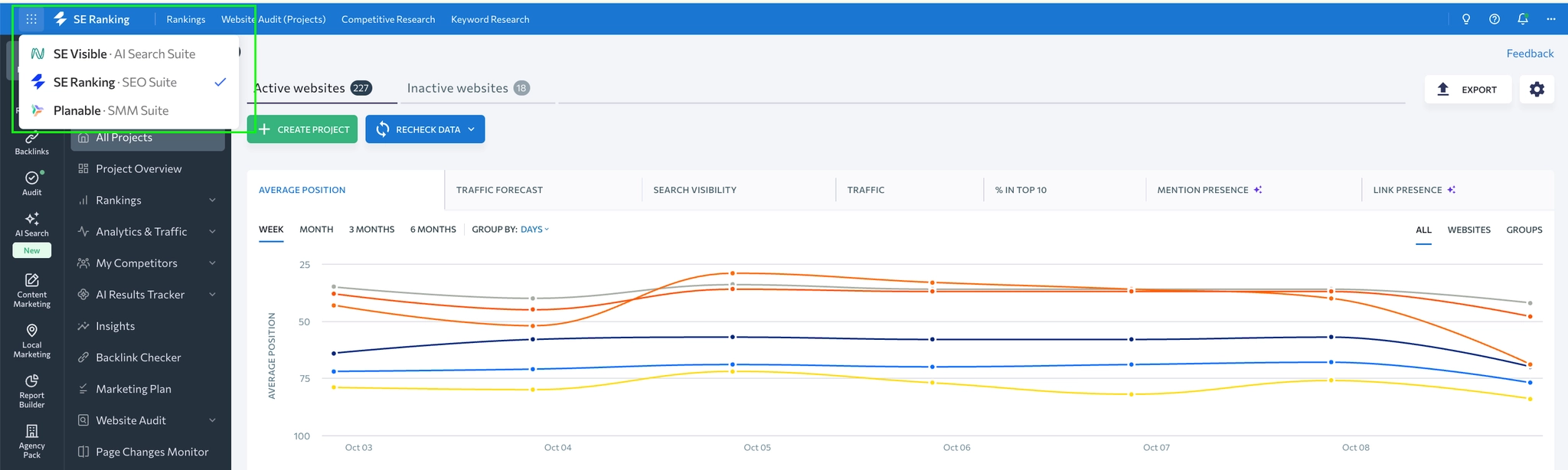
Even better, Planable is actually part of the SE Ranking platform. That means you can manage AI and organic search visibility alongside social media campaigns within a fully unified ecosystem.
Planable is part of the SE Ranking platform, so social and search work live in one place
To put it differently, bundling Planable and SE Ranking will turn your marketing team into a powerhouse for all things omnichannel visibility-related. Plus, you’ll also get a 20% bundle discount. Try it out for free and see for yourself!
How do you choose the right Semrush alternative for your team?
Choose by the bottleneck that’s costing you the most hours today, then check that the tool’s pricing model grows the way your agency does. These four bottlenecks each point to a different first trial, so you spend the trial window on the tool most likely to stick.
If client approvals are your bottleneck
Trial Planable first. Required approval on Pro means a post can’t be scheduled until an approver signs off, and clients see only what you share with them. For an agency lead, that’s governance across brands; for the person running the calendar, it’s fewer follow-up emails.
If your inbox is your bottleneck
Start the trial window on Agorapulse. Reviews from every connected network land in the same queue as comments and DMs, which matters most when a multi-location client’s reviews need answers the same day.
If listening depth matters most
Hootsuite earns the first trial if you need long listening history and trend forecasts, as long as you budget for its Enterprise tier. If brand keyword monitoring is enough, Sprout Social’s Standard plan is the narrower and earlier step. Semrush’s Media Monitoring covers 10 keywords on Business, so either pick adds depth rather than moving sideways.
If budget is the hard limit
Trial SocialPilot if you need white-label reports for clients, or Buffer if a small team can start on the free plan. Run your real channel and user counts through both pricing pages first, since one charges per plan and the other per channel. A team of two posting to three channels lands in a very different place on each model than a team of six covering fifteen.
When is Semrush still the right call for social media?
Semrush’s Social Toolkit still makes sense when social is a side job for an SEO team that already pays for Semrush and wants one login. If none of your clients need to sign off before posts go live, the case for switching gets weaker. In these three situations, staying put is the stronger choice:
Your SEO team already lives in Semrush. You can use the Social Toolkit as a standalone solution or alongside Semrush’s other toolkits, with SEO and Content among them.
You track many competitor profiles on a small budget. Base tracks 10 competitor profiles across 5 social profiles. Social Tracker lets you track any brand just by entering its domain.
You want influencer analytics next to listening. The Business plan adds tools for influencer marketing and social listening on top of everything in Pro, and you accept the Business plan price that comes with them.
FAQs
Is there a free alternative to Semrush for social media?
Yes. Buffer’s Free plan connects up to 3 channels at no cost, which covers a small team publishing to a few profiles. Planable’s free trial has no time limit and caps at 50 posts in total, so an agency can run real client approvals before paying. Pick Buffer to stay free, and Planable to test sign-off.
What is better than Semrush for agency approvals?
Planable. On Pro and Enterprise, at least one approver must approve a post before it can be scheduled or published. Content can also lock after approval, so the post becomes read-only once the client signs off. Enterprise adds sequential approval stages, which lets a post move from your team to legal to the client.
Is Semrush or Planable better for social media management?
Semrush is the pick when SEO comes first and you want AI to generate on-brand content ideas and hashtags, along with posts and visuals, inside the same suite. Planable is the pick when client sign-off is the job, because the approval flow and the client view live inside each workspace. Decide by which team owns the social calendar.
Is there a Semrush alternative with an API?
Yes. Sprout Social includes the Sprout API and helpdesk integrations on its Advanced plan. Planable offers a Public API for custom integrations and MCP, which connects Claude, Cursor, ChatGPT or any MCP-compatible AI tool to your workspaces. Choose Sprout for helpdesk-heavy care teams and Planable for agencies building AI-assisted drafting.
Which Semrush alternative should you choose?
Move the social half of Semrush to a tool built around social work, and keep the SEO half in an SEO platform such as SE Ranking. Then take two steps before your next invoice:
Name what your bill will grow with. Seats, channels or clients: whichever you expect to add fastest over the next year decides which pricing model stays affordable.
Trial the matching pick before your Semrush renewal. Put one real client through the trial window, so the renewal call rests on your own counts and your own approval rounds.
If approvals are what’s slowing your clients down, the 50-post trial is enough to run a real client round on your own content. Try Planable for free and see how your next approval cycle goes.
Horea is a B2B SaaS content writer and MarTech researcher. He has written for Planable since 2023, covering social media management, scheduling, listening and collaboration software. He's spent 7+ years writing about marketing technology, with work for HubSpot, Surfer and UX Pilot AI on topics from SEO and answer engine optimization to UX and web design tools. His roundups are research-first: he tests the tools and workflows himself, then writes the comparisons that help marketers choose with confidence.








 Creation
 Scheduling
 Planning
 Social Inbox
 Collaboration
 Analytics
 Approval
 Social Listening